



Not all breast changes are cancer. In fact, most are benign (non-cancerous). These conditions are common and can affect women (and sometimes men) of all ages. Most benign breast conditions are not linked to an increased cancer risk, though a few may require monitoring or removal to ensure they don’t contain abnormal cells.
Common Types of Benign Breast Conditions
1. Fibrocystic Changes
- What it is: A common condition causing lumpy, tender breasts, especially before your period.
- Symptoms: Swelling, pain, or thickened areas that may change with your menstrual cycle.
- Is it serious? No. It’s not linked to cancer but can make exams or imaging more complex.
2. Cysts
- What they are: Fluid-filled sacs that feel like soft or firm lumps.
- Symptoms: Can be painful, especially just before your period.
- Diagnosis: Usually found during an exam or imaging (like an ultrasound).
- Treatment: Often none needed; larger or painful cysts can be drained.
3. Fibroadenomas
- What they are: Solid, rubbery lumps that move easily under the skin.
- Who gets them? Most common in women aged 15–35.
- Are they dangerous? No. Most are benign, though occasionally removed if large or growing.
4. Intraductal Papillomas
- What they are: Small, wart-like growths inside breast ducts.
- Symptoms: May cause clear or bloody nipple discharge.
- Management: Often removed to rule out atypical cells.
5. Mastitis and Breast Infections
- Who it affects: Common in breastfeeding women.
- Symptoms: Red, hot, swollen area of the breast, often with fever.
- Treatment: Antibiotics; sometimes drainage is needed.
6. Fat Necrosis and Oil Cysts
- Caused by: Trauma or surgery to the breast.
- Feel like: Firm lumps that can mimic cancer but are harmless.
- Diagnosis: Imaging and sometimes biopsy to confirm.
7. Duct Ectasia
- What it is: Widening of milk ducts, often with thick discharge.
- Who it affects: Typically older women.
- Is it serious? Usually not; rarely requires surgery.
8. Nipple Discharge
Nipple discharge is fluid that comes out of the nipple, either on its own or when the breast or nipple is squeezed. Most of the time, it's not a sign of cancer, especially when it's from both breasts and happens with pressure.
Common Causes (Usually Benign)
- Hormonal changes (e.g., during periods, pregnancy, stopping breastfeeding)
- Duct ectasia: Thickened milk ducts, often in older women
- Intraductal papilloma: A small, benign growth in a milk duct
- Medications: Some drugs (e.g., antidepressants or hormonal therapy) can cause discharge
- Infection or abscess: May come with pain, redness, and swelling
Types of Discharge and What They Might Mean
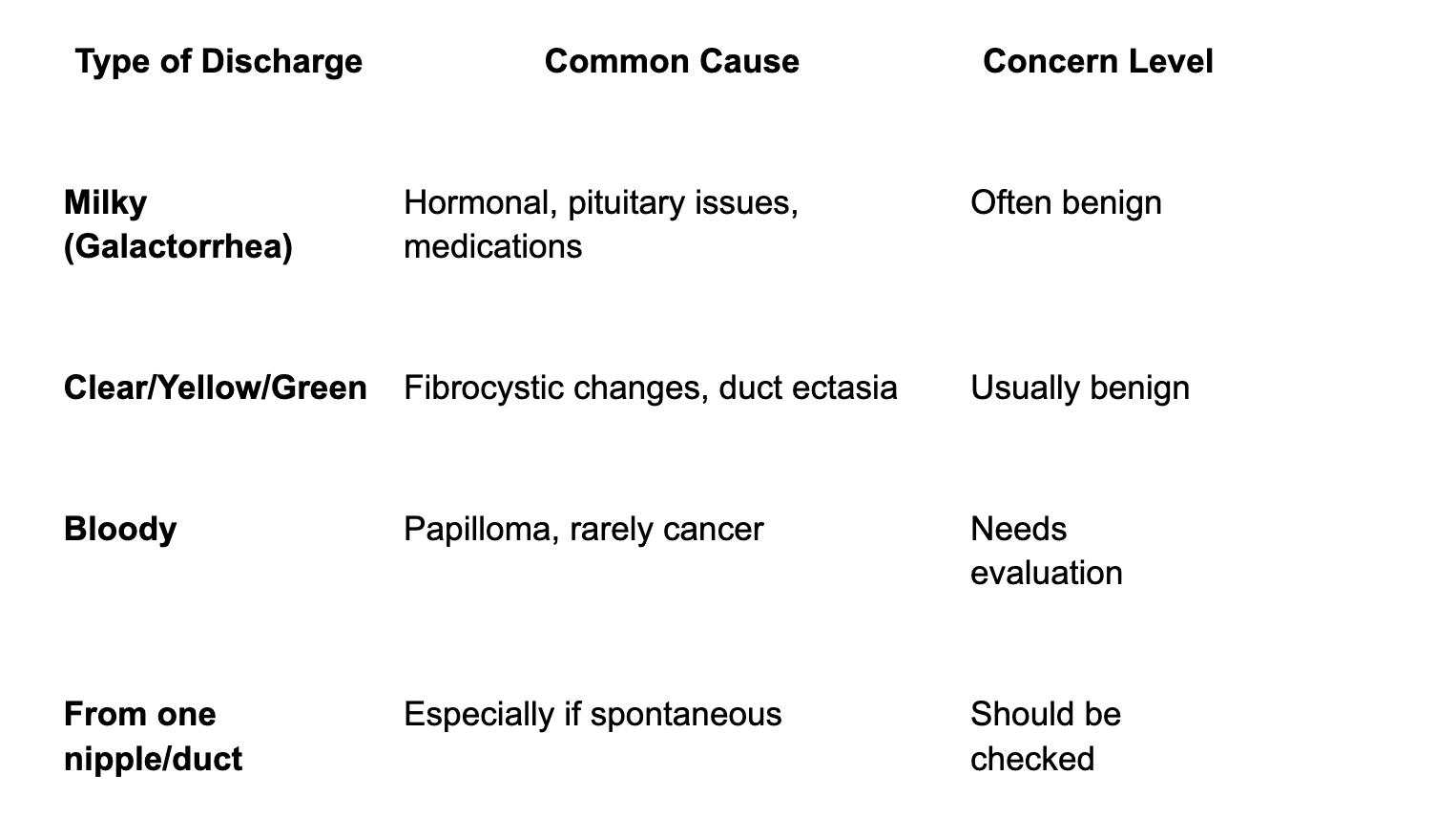
When to See Dr. Coste
- Discharge is bloody
- Happens without squeezing
- Comes from one breast only
- You feel a lump, or have skin or nipple changes
Breast Pain (Mastalgia): Common and Often Not Cancer
What Is Breast Pain?
Breast pain is very common—affecting over 70% of women at some point—and most of the time, it's not a sign of cancer.
Types of Breast Pain
1. Cyclical Pain
- Linked to your menstrual cycle
- Feels like heaviness or soreness
- Affects both breasts, especially before your period
2. Non-Cyclical Pain
- Not related to your cycle
- May be sharp, burning, or localized
- Can come from the breast, chest wall, or even muscles/ribs
3. Breast Pain in Men
- Often due to gynecomastia (enlarged breast tissue)
- May also result from medications or hormone changes
Common Causes
- Hormonal fluctuations
- Fibrocystic changes
- Ill-fitting bras or lack of support
- Breast cysts or infections
- Musculoskeletal pain (e.g., from exercise or posture)
What Can Help?
- Supportive bras
- Warm or cold compresses
- Over-the-counter pain relief
- Evening primrose oil or prescribed medications in some cases
When to See Dr. Coste
- Pain is persistent, worsening, or in one area only
- You feel a lump or see skin changes
- You’re not sure if it’s breast pain or chest pain
